


20 Feb Plywood vs. Particleboard for Murphy Beds: Why Material Matters
If you’ve ever assembled a flat-pack bookcase and watched it sag under a few books, you already understand the difference between plywood and particleboard. One is built to last. The other is built to a price.
For a Murphy bed, that difference matters a lot more than it does for a bookcase. A Murphy bed is anchored into your wall studs, holds a mattress that may weigh 80 pounds or more, and gets folded and unfolded potentially thousands of times over its life. The material it’s made from determines whether it’s still performing like new in ten years, or whether the hinges are pulling loose and the panels are crumbling at the edges.
At Madewell Woodworks, every Murphy bed we build starts with real plywood. Not particleboard, not MDF, not a hybrid. Here’s why that choice matters, and what to look for when comparing builders.
What Is Plywood, and What Makes It Different?
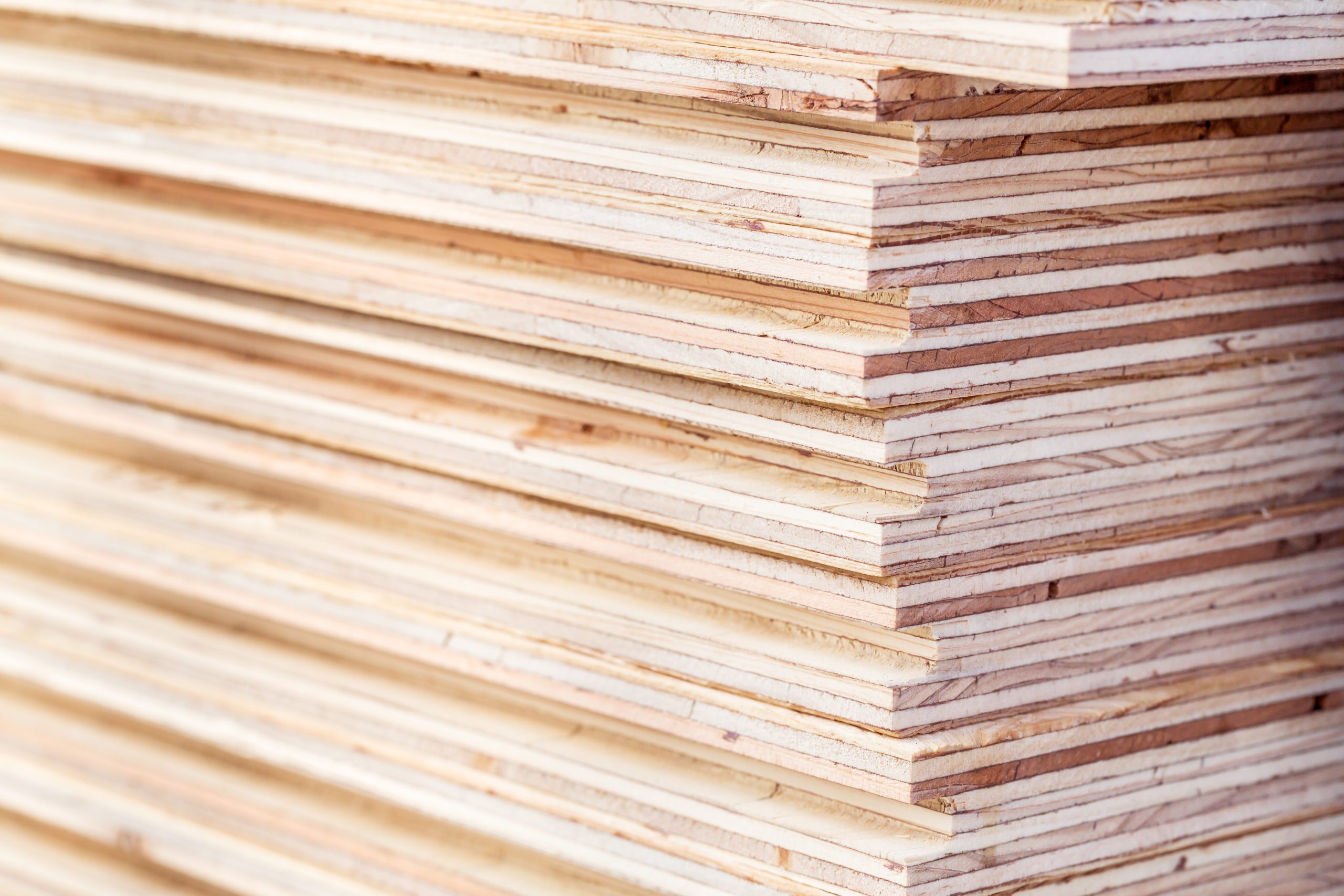
Plywood is made by gluing together thin sheets of wood veneer in alternating grain directions. Each layer runs perpendicular to the one above and below it. This cross-laminated construction is what gives plywood its strength, its resistance to warping, and its ability to hold fasteners reliably.
Particleboard, on the other hand, is made from wood chips, sawdust, and shavings compressed together with resin. MDF (medium-density fiberboard) is similar, made from even finer wood fibers. Both are cheaper to produce than plywood, and both are widely used in flat-pack and budget furniture. They look similar on the surface, especially once painted or laminated, but they behave very differently under stress.
The difference between a plywood Murphy bed and a particleboard one is not always visible on day one. It becomes very visible by year three.
Why Plywood Is the Right Choice for a Murphy Bed
1. It Holds Screws and Hardware Reliably
This is the single most important reason to use plywood in a Murphy bed. The mechanism hardware, the hinges, the wall mounting brackets, and the side cabinet connections all rely on screws biting into the cabinet material and staying there.
Plywood grips screws tightly because the alternating grain layers give the fastener something solid to hold onto from multiple directions. Particleboard does not. In particleboard, screws compress the loose fiber structure around them, and over time, with the repeated stress of opening and closing a Murphy bed, those screws begin to strip and loosen. A mechanism that was tight on day one becomes wobbly within a few years.
With wall mounting in particular, this is a safety issue, not just a quality issue. The brackets that attach the bed cabinet to your wall studs need to hold reliably for the life of the bed. Plywood gives you that confidence. Particleboard does not.
2. It Does Not Swell or Degrade with Moisture
Particleboard and MDF absorb moisture readily. In a humid climate like Austin, or in a room that sees temperature fluctuations, particleboard can swell, warp, and eventually crumble at the edges. Once that process starts, the damage is permanent.
Plywood is significantly more resistant to moisture. The laminated construction and the natural wood veneer layers give it dimensional stability that particleboard cannot match. For a piece of furniture that will be in your home for decades, that stability matters.
3. It's Structurally Stronger
A Murphy bed cabinet has to support its own weight plus the weight of the mattress in motion. Every time the bed is lowered or raised, the structure flexes slightly. Plywood handles this flex without breaking down. Its cross-laminated layers distribute stress across the panel rather than concentrating it.
Particleboard is brittle by comparison. It handles compressive loads reasonably well, but it struggles with the lateral and shear forces that a Murphy bed generates during use. Over time, joints loosen, panels crack, and the overall structure loses rigidity.
Plywood vs. Particleboard: A Direct Comparison
A note on MDF: MDF is sometimes used for painted door and drawer fronts because it takes paint very smoothly. That is a legitimate application. Where MDF and particleboard fail is as the structural material for the cabinet box, shelves, and mounting surfaces.
What 'Engineered Laminate' Actually Means
Some Murphy bed and closet companies, including large franchise operations and national closet brands, describe their products as built from ‘engineered laminate,’ ‘thermally fused laminate,’ or ‘European engineered panels.’ These terms sound technical and premium. They are worth understanding before you take them at face value.
Laminate is a surface finish. It is a layer of decorative material, typically paper or plastic, bonded to the face of a panel to give it color, texture, and a cleanable surface. Thermally fused laminate is a specific process for bonding that layer more durably. It is a legitimate finishing technique and it does produce a clean, consistent appearance.
What these terms do not tell you is what is underneath the laminate. And in most franchise closet systems and flat-pack Murphy bed kits, what is underneath is particleboard or MDF. The laminate makes it look finished. It does nothing to improve the structural strength, screw-holding ability, or moisture resistance of the panel itself.
Engineered laminate is a surface finish. It tells you what the panel looks like, not what it is made of. Always ask what is underneath.
A plywood panel can also be laminated or painted. The difference is that under the finish, the structural material is cross-laminated wood veneer rather than compressed wood fibers. When you are evaluating a Murphy bed builder, the finish is secondary. The substrate is what determines how the piece performs over time.
The companies that use these terms are not necessarily being deceptive. Engineered panels have legitimate applications in furniture. But a Murphy bed anchored into your wall studs, holding an 80-pound mattress, and cycling open and closed thousands of times is not the same application as a closet shelf holding sweaters. The demands are different, and the material should reflect that.
What to Ask a Murphy Bed Builder
Not every builder is upfront about what material they use. Some advertise ‘wood construction’ without specifying whether that means plywood or particleboard. Here are the questions worth asking before you commit:
- Ask specifically: What material do you use for the cabinet box?
- Follow up: Is the plywood Baltic birch or a lower grade?
- Clarify: Are the shelf panels and side panels also plywood, or just the face frames?
- Details matter: What thickness of plywood do you use?
- For peace of mind: Can I see examples of how the hardware mounts to the cabinet?
At Madewell Woodworks, the answer to all of these is consistent: we build with 3/4-inch birch plywood throughout. Not just the visible panels, not just the face frames, but the entire cabinet structure. It is heavier than particleboard, it costs more to source, and it takes more time to work with. That is exactly why we use it.
Built to Last in Austin
Austin homes are not gentle on furniture. The heat, the humidity swings between summer and winter, and the typical daily use of a guest room or home office puts real demands on the materials in your walls.
We source approximately 90% of our materials from Texas suppliers, including the plywood we use in every build. Our beds carry a 2-year craftsmanship warranty and our hardware carries a lifetime warranty. That confidence comes directly from the materials we start with.
If you are comparing quotes from multiple builders and one comes in significantly cheaper, the first question to ask is what they are building with. The difference between a plywood Murphy bed and a particleboard one is not always visible on day one. It becomes very visible by year three.

Sorry, the comment form is closed at this time.